Fiber, the Gut, and Bone: The Under Appreciated Connection
Last Updated: August 20, 2026
When most people think about fiber, they think about digestive regularity. They may also know that fiber can support healthy cholesterol levels and blood sugar regulation. But emerging research suggests that fiber may have many other benefits, including supporting bone health.
This does not mean that fiber directly builds bone, nor is eating more fiber a treatment for osteoporosis. Instead, fiber may help create a healthier internal environment that supports normal bone remodeling, the ongoing process through which old or damaged bone is broken down and replaced with new bone.
As a Nutritional Therapy Practitioner and AIP (Autoimmune Protocol) Coach, I tend to view many aspects of health through the lens of gut health. The state of the digestive system has far-reaching effects throughout the body, including immune function, inflammation, metabolic health, mood, hormone signaling, and the body’s ability to digest, absorb, and use nutrients for optimal health.
The Gut–Bone Connection
So where does bone fit in? The gut and skeleton may seem like separate systems, but they are actually connected through several pathways. The trillions of microorganisms living in the digestive tract, collectively known as the gut microbiome, help influence these processes. The microbiome can support digestion, produce beneficial compounds, communicate with immune cells, help regulate inflammation, and maintain the intestinal barrier. All of these functions may influence bone remodeling.
When the microbiome becomes imbalanced, known as dysbiosis, or the intestinal barrier becomes more permeable than it should, inflammatory signaling may increase. This increased intestinal permeability is sometimes referred to as “leaky gut.” Over time, chronic inflammation can shift the balance between bone formation and bone breakdown. Additionally, gut-related inflammatory conditions, as well as some autoimmune conditions, may affect bone health.
Researchers sometimes refer to this relationship as the gut–bone axis.
How Fiber Feeds the Gut Microbiome
Many factors can support, or undermine, gut health, and eating fiber-rich foods is one important way to nourish this system. We often hear, “You are what you eat,” but a more accurate version is: “You are what you can digest, absorb, and use.” A nutrient-dense diet is essential, but the digestive system must be able to break down food and absorb its nutrients. This matters for bone health because calcium, magnesium, protein, vitamins K and D, and other bone-supportive nutrients must be absorbed before the body can use them.
Fiber contributes favorably to this environment in several ways. Different foods contain different types of fiber, each offering distinct benefits for gut health. This is one reason dietary variety matters.
Certain types of fiber act as prebiotics, providing food for beneficial gut microbes. When microbes ferment these fibers, they produce compounds called short-chain fatty acids that can influence the intestinal barrier, immune activity, and inflammation. A varied, fiber-rich diet may help support a more diverse and resilient gut microbial community and, in turn, many aspects of health, including bone health. Others mainly add bulk and help move material through the digestive tract, which is also important.
Building a Fiber-Rich, Bone-Supportive Eating Pattern
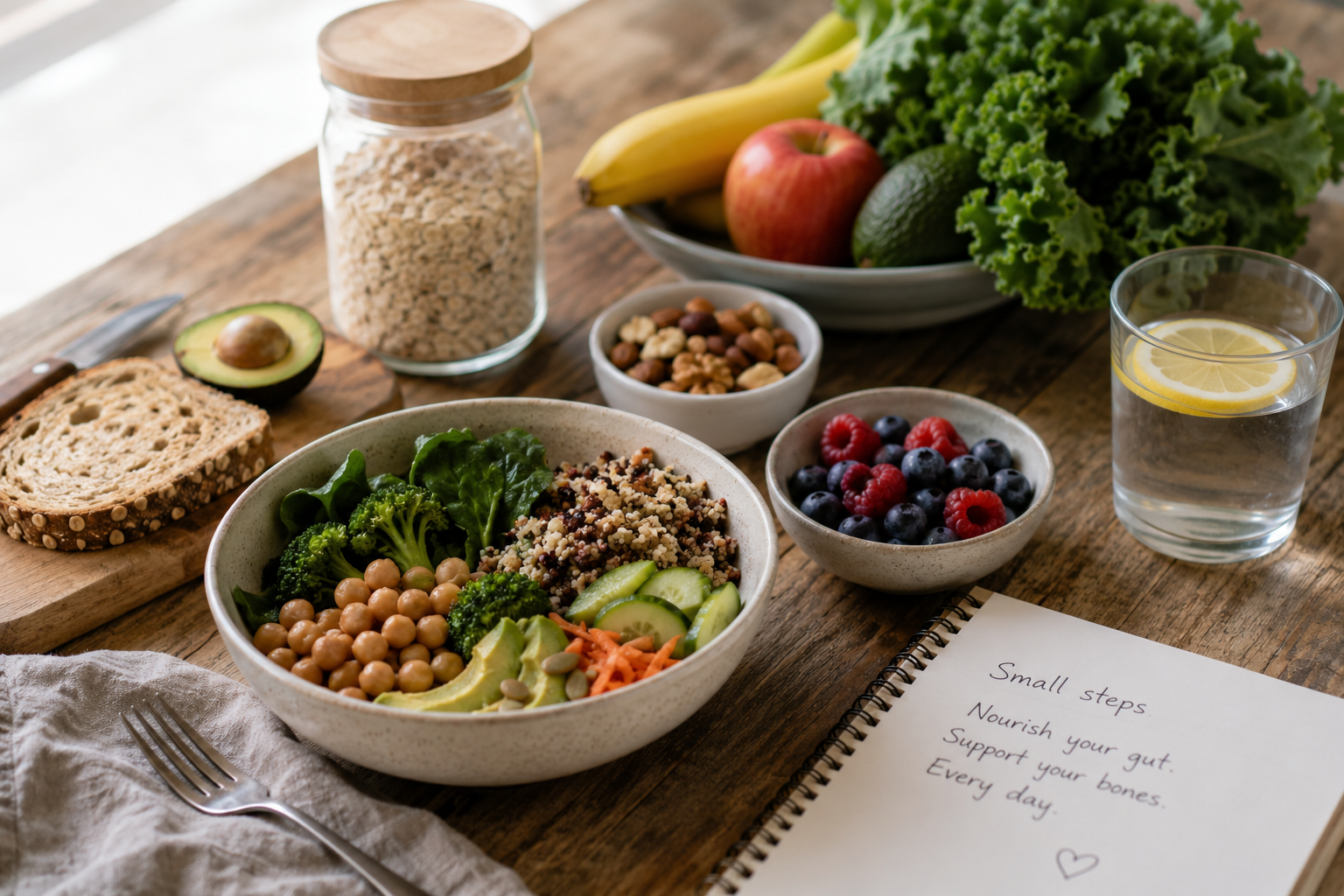
Include a range of vegetables, fruits, beans, lentils, nuts, seeds, and whole grains in a bone supportive diet. These foods provide fiber along with vitamins, minerals, antioxidants, and other beneficial plant compounds. Aim for variety rather than relying on a single “superfood,” since different foods provide different fibers and nutrients. For many adults, aiming for approximately 25 to 30 grams of fiber daily is a practical goal, although individual needs and tolerance vary.
More Fiber Is Not Always Better, Especially All at Once
Increasing fiber too quickly can cause gas, bloating, cramping, and changes in bowel habits. Increase it gradually, drink adequate fluids, and adjust based on your digestive response.
Individual tolerance is especially important for people with IBS, IBD, SIBO, or active digestive symptoms. During a flare or period of increased symptoms, cooking, peeling, or blending foods and temporarily reducing raw or coarse fibers may improve comfort.
The goal is a varied, sustainable eating pattern, not the highest possible fiber intake. Persistent digestive symptoms should be discussed with a healthcare professional.
The Bottom Line
Fiber does far more than support digestive regularity. Certain types of fiber nourish beneficial gut microbes, setting off a cascade of effects that may help regulate inflammation, support intestinal health, influence mineral absorption, and affect other processes involved in bone remodeling.
A protein rich nutrient dense diet, resistance training, impact exercise when appropriate, and other established bone-health strategies remain essential. But supporting gut health through a varied, fiber-rich diet may be another important part of the bone-health picture.
My Challenge to You:
Add one new fiber-rich plant food to your usual meals. Try a new vegetable with dinner, add berries to breakfast, include lentils in a soup, or replace a refined grain with oats, barley, or quinoa. Increase gradually, drink plenty of water, and notice how your digestive system responds.
Stronger bones are built one day at a time. Nourish well. Move with purpose. Stay consistent.
Frequently Asked Questions
-
Fiber may support bone health indirectly through its effects on the gut microbiome, intestinal health, inflammation, and nutrient absorption. Research into the gut–bone connection is still emerging, so fiber should be viewed as one part of an overall bone-supportive lifestyle and not a treatment for osteoporosis.
-
Some types of dietary fiber act as prebiotics, providing fuel for beneficial gut microbes. When these microbes ferment certain fibers, they produce short-chain fatty acids such as acetate, propionate, and butyrate. These compounds can influence the intestinal barrier, immune activity, and inflammation, which are among the pathways being studied in the gut–bone connection.
-
For many adults, approximately 25–30 grams of fiber per day is a practical goal, although individual needs vary. Rather than focusing only on a number, aim to eat a variety of fiber-rich foods, including vegetables, fruits, beans and lentils, nuts, seeds, and whole grains. Increasing fiber gradually can help your digestive system adjust.
-
No. There is not enough evidence to consider dietary fiber a treatment for osteoporosis. Fiber may contribute to a healthy gut environment and may influence pathways involved in bone health, but established bone-health strategies remain important. These include adequate nutrition, along with appropriate resistance and impact exercise and medications when indicated.
Sources
Rizzoli R. Nutritional influence on bone: role of gut microbiota. Aging Clin Exp Res. 2019;31(6):743–751. https://doi.org/10.1007/s40520-019-01131-8
Zaiss MM, Jones RM, Schett G, Pacifici R. The gut-bone axis: how bacterial metabolites bridge the distance. J Clin Invest. 2019;129(8):3018–3028. https://doi.org/10.1172/JCI128521
Makki K, Deehan EC, Walter J, Bäckhed F. The impact of dietary fiber on gut microbiota in host health and disease. Cell Host Microbe. 2018;23(6):705–715. https://doi.org/10.1016/j.chom.2018.05.012
Whisner CM, Martin BR, Nakatsu CH, et al. Soluble corn fiber increases calcium absorption associated with shifts in the gut microbiome: a randomized dose-response trial in free-living pubertal females. J Nutr. 2016;146(7):1298–1306. https://doi.org/10.3945/jn.115.227256
Whisner CM, Martin BR, Schoterman MHC, et al. Galacto-oligosaccharides increase calcium absorption and gut bifidobacteria in young girls: a double-blind cross-over trial. Br J Nutr. 2013;110(7):1292–1303. https://doi.org/10.1017/S000711451300055X
Wu KC, Cao S, Weaver CM, et al. Prebiotic to improve calcium absorption in postmenopausal women after gastric bypass: a randomized controlled trial. J Clin Endocrinol Metab. 2022;107(4):1053–1064. https://doi.org/10.1210/clinem/dgab883
Crohn’s & Colitis Foundation. What Should I Eat with IBD? https://www.crohnscolitisfoundation.org/patientsandcaregivers/diet-and-nutrition/what-should-i-eat