What to Eat Before and After Exercise for Stronger Bones (and Muscles)
Last Updated: September 29, 2026
Many people think about what to eat before exercising so they have enough energy to complete a run, strength workout, HIIT class, or competition. But what happens after the workout is equally important, often overlooked, and integral to building bone and muscle strength.
Exercise provides a stimulus that tells muscles and bones to adapt to the demands placed on them. Nutrition provides the energy and raw materials needed for recovery and remodeling. The workout supplies the signal; food helps the body respond.
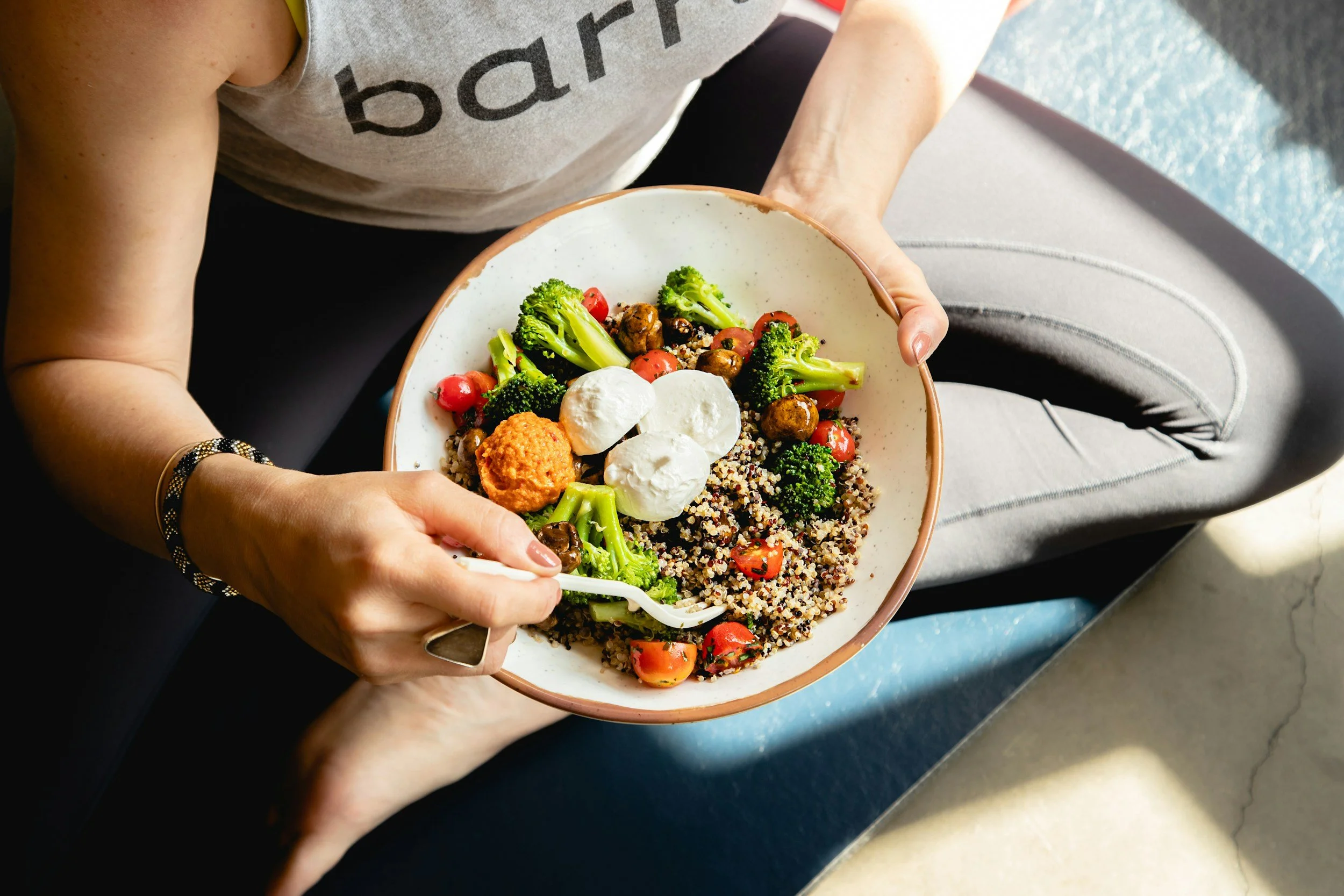
As bone researchers Craig Sale and Kirsty Elliott-Sale wrote in their scientific review, Nutrition and Athlete Bone Health: “Bone is a nutritionally modified tissue.” In other words, exercise and nutrition cannot be separated when we are talking about building and preserving bone.
Sports nutrition is a highly specialized area, and this article is not meant to cover performance nutrition. Instead, it provides a simple framework for fueling before and after exercise to support muscle, bone, and overall health.
Before Exercise:
What and how much you eat before a workout should reflect the activity ahead. Exercise physiologist and nutrition scientist Dr. Stacy Sims summarizes this principle simply:
“Fuel for the work required.”
The goal is to begin a demanding workout with enough energy available to train well, not to follow a rigid eating schedule. As a general guide:
If you eat a balanced meal containing carbohydrate and protein about two to three hours before exercising, that meal will usually provide enough fuel, even for a challenging workout. You do not automatically need another snack. Add one only if you are hungry or find that a small carbohydrate boost helps you feel and perform better during long or intense sessions.
If it has been several hours since you ate and you are preparing for strength training, HIIT, or prolonged endurance exercise, have a small, easily digested snack about 30–90 minutes beforehand. Include carbohydrate and, ideally, a little protein.
A short, easy activity generally does not require special pre-workout fueling, regardless of when you last ate.
What about protein vs carbohydrates before a workout?
The balance can shift depending on the workout. Before strength or impact training, some carbohydrate and protein can support training quality and make amino acids available to muscle. Before HIIT or endurance exercise, carbohydrate becomes a greater priority because longer and higher-intensity activities rely more heavily on stored carbohydrate for energy.

A pre-workout snack does not need to be complicated. A few ideas to try:
Fruit with yogurt
Toast with peanut butter
Cottage cheese
A high-quality balanced bar,
Kefir and berries
A small smoothie
The exact food matters less than choosing something you tolerate well and matching the amount to the workout ahead.
One additional bone-specific consideration: although meeting calcium needs throughout the day remains the priority, emerging research suggests that consuming calcium before prolonged, sweaty endurance exercise may lessen short-term changes in parathyroid hormone and bone-resorption markers associated with calcium lost through sweat. However, we do not yet know whether this improves bone density or reduces fracture risk. For most workouts, no special calcium timing is needed. Before a long endurance session, including a calcium-rich food may be a useful bonus.
Simple calcium-containing snack options include:
yogurt or kefir with fruit
cottage cheese with whole-grain crackers
calcium-fortified orange juice
a smoothie made with dairy milk or calcium-fortified plant milk
What if you exercise first thing in the morning?
For women of all ages, my recommendation is simple: fuel first.
This is important not only during perimenopause and post-menopause, but younger women also need adequate energy to support training, recovery, hormones, muscle, and bone.
Some men may tolerate fasted exercise well, but many men also benefit from fueling before a demanding workout. If the goal is to build strength, muscle, fitness, and bone, starting the workout properly fueled makes sense for everyone.
Cortisol is naturally higher in the morning, and exercise itself is a form of physiological stress. Beginning a workout after an overnight fast can add another stressor and may make it harder to maintain adequate energy availability.
As mentioned above, you do not need a full breakfast immediately before exercising. If you have enough time to digest it comfortably, a balanced breakfast containing carbohydrate and protein can fuel the workout. If you are exercising soon after waking, have a small, easily digested snack, then after the workout, follow up with a more substantial meal or snack containing enough protein and energy to support recovery and adaptation.
The goal is not to feel overly full. It is to give the body a clear message: energy is available for the work you are asking it to do, and for the rebuilding that follows.
The simple takeaway: If you ate a balanced meal within the past few hours, you are likely already fueled. If you did not, or you are exercising first thing in the morning, have a small snack before your workout.
Now let’s talk about what comes next!
After Exercise:
The workout may be over, but the body’s work is just beginning. This is when recovery and adaptation take place (where the magic happens!).
After exercise, the body repairs and remodels muscle tissue and replaces stored energy. Bone also begins responding to the mechanical stimulus it received during weight-bearing, resistance, or impact exercise.
Protein supplies the amino acids needed for muscle repair and remodeling. Carbohydrate helps replace the glycogen used during exercise, with the amount needed depending on the length and intensity of the workout.
For many active adults, approximately 30 grams of high-quality protein in a post-workout meal or snack is a useful practical target, although needs vary by body size, age, total daily protein intake, and activity. Older adults may benefit from aiming higher because muscle becomes less responsive to smaller amounts of protein with age, a change known as anabolic resistance.
Protein quality matters, but you do not need to calculate leucine, for example, after every workout. Dairy foods, eggs, soy, meat, fish, poultry, and well formulated protein powders provide all essential amino acids. Plant-based meals can also meet these needs, although they may require a larger serving or a combination of protein-rich foods.
Carbohydrate needs vary with the workout. After a typical strength or moderate-intensity session, include a source of carbohydrate with your protein. After longer or more intense exercise, a more generous portion may be needed to replace the energy used and support recovery.
Most recreational exercisers do not need a special recovery product unless they prefer that. A balanced meal or snack can provide what the body needs.
Does the Type of Workout Change What You Need?
The basic principle is always the same: fuel the activity and support recovery. The emphasis, however, can vary.
Strength and impact exercise: Prioritize protein after training, with some carbohydrate based on the intensity of the session and your overall needs.
HIIT: Include carbohydrate before the workout to support intensity, then combine carbohydrate and protein afterward.
Endurance exercise: Longer runs, rides, swims, and hikes generally require more carbohydrate (along with the protein) before and after exercise. Very long sessions may also require fuel during the activity, followed by fluids and sodium as needed.
Shorter, lower-intensity activity: A separate snack may not be necessary if you have eaten recently and a balanced meal is coming soon.
When Should I Eat After Exercise? Is There Really a 30-Minute Anabolic Window?
You may have heard that protein must be consumed within 30 minutes after exercise or the opportunity to build muscle will be lost.
The science does not support such a rigid cutoff. However, post-workout nutrition still matters. Eating within roughly 30 minutes to one hour is a practical general goal. If you ate a substantial protein-containing meal shortly before training, there is less urgency afterward - but refueling is still important. As discussed below, women may benefit from aiming for the earlier end of this window, particularly after a hard workout.
Is the window different for women and men?
Current research does not establish a precise point when the post-workout “window” closes for either women or men. However, biological and hormonal differences may influence how women use protein and recover from exercise.
Dr. Stacy Sims recommends that women consume approximately 25–30 grams of high-quality protein within about 30 minutes after a hard workout. She considers prompt refueling especially important for women because progesterone can increase protein breakdown during the luteal phase, while perimenopausal and postmenopausal women may need a stronger protein stimulus to help overcome anabolic resistance.
Men also benefit from post-workout protein. Dr. Sims suggests they may have more flexibility in the timing, but research has not established a precise cutoff for either sex. For everyone, total daily protein and its distribution throughout the day remain essential.
The International Society of Sports Nutrition position stand on female athletes, coauthored by Dr. Sims, emphasizes adequate energy intake, protein distributed throughout the day, and high-quality protein consumed close to exercise.
So, while 30 minutes should not be viewed as a point after which the workout’s benefits disappear, it offers women a useful and practical target: fuel before exercise, then prioritize protein and energy afterward.
A Note About Weight Loss and GLP‑1 Medications
I would be remiss if I didn’t address weight management when discussing food and exercise, especially in this new era of GLP‑1 medications, when reduced appetite can make adequate fueling more difficult. Substantial weight loss can include the loss of muscle and may also affect bone health. For people using these medications, combining bone-building resistance and impact exercise with adequate protein, energy, and other nutrients, as outlined in this article, is particularly important.
The Bigger Picture
In Great Bones, Dr. Keith McCormick also presents bone health as a whole-body process involving exercise, nutrition, hormones, digestion, inflammation, and overall health. A bone-building workout does not occur in isolation. The body needs sufficient energy, protein, minerals, and recovery to respond and adapt.
Workout nutrition does not have to be complicated. There is no perfect food, shake, or precise minute that determines whether a workout “counts.”
What matters most is the pattern:
Prioritize fueling before and after exercise - eat enough overall to support exercise, recovery, and health.
Include meaningful servings of protein throughout the day rather than saving most of it for dinner.
Use carbohydrate to fuel more intense or prolonged activity.
Meet calcium and other bone-supportive nutrient needs consistently.
Soon after demanding exercise, eat a balanced meal or snack rather than intentionally remaining depleted.
Adjust your fueling to the workout and to your individual needs and digestive tolerance.
The workout supplies the signal. Nutrition supplies the materials. When we consistently combine the two, we give our muscles and bones the best opportunity to adapt, rebuild, and become stronger.
Stronger bones are built one day at a time. Nourish well. Move with purpose. Stay consistent.
Sources
Sims, S. T., et al. (2023). International Society of Sports Nutrition position stand: Nutritional concerns of the female athlete.
https://pubmed.ncbi.nlm.nih.gov/37221858/Sale, C., & Elliott-Sale, K. J. (2019). Nutrition and Athlete Bone Health.
https://pubmed.ncbi.nlm.nih.gov/31696454/Casuso, R. A., et al. (2025). Does Protein Ingestion Timing Affect Exercise-Induced Adaptations? A Systematic Review with Meta-Analysis.
https://pubmed.ncbi.nlm.nih.gov/40647175/Baker, L. B. (2017). Sweating Rate and Sweat Sodium Concentration in Athletes: A Review of Methodology and Intra/Interindividual Variability.
https://pubmed.ncbi.nlm.nih.gov/28332116/Jensen, S. B. K., et al. (2024). Bone Health After Exercise Alone, GLP-1 Receptor Agonist Treatment, or Combination Treatment.
https://pubmed.ncbi.nlm.nih.gov/38916894/