
Why Walking Isn't Enough to Build Bone (And What Actually Works)
Last Updated: June 10, 2026
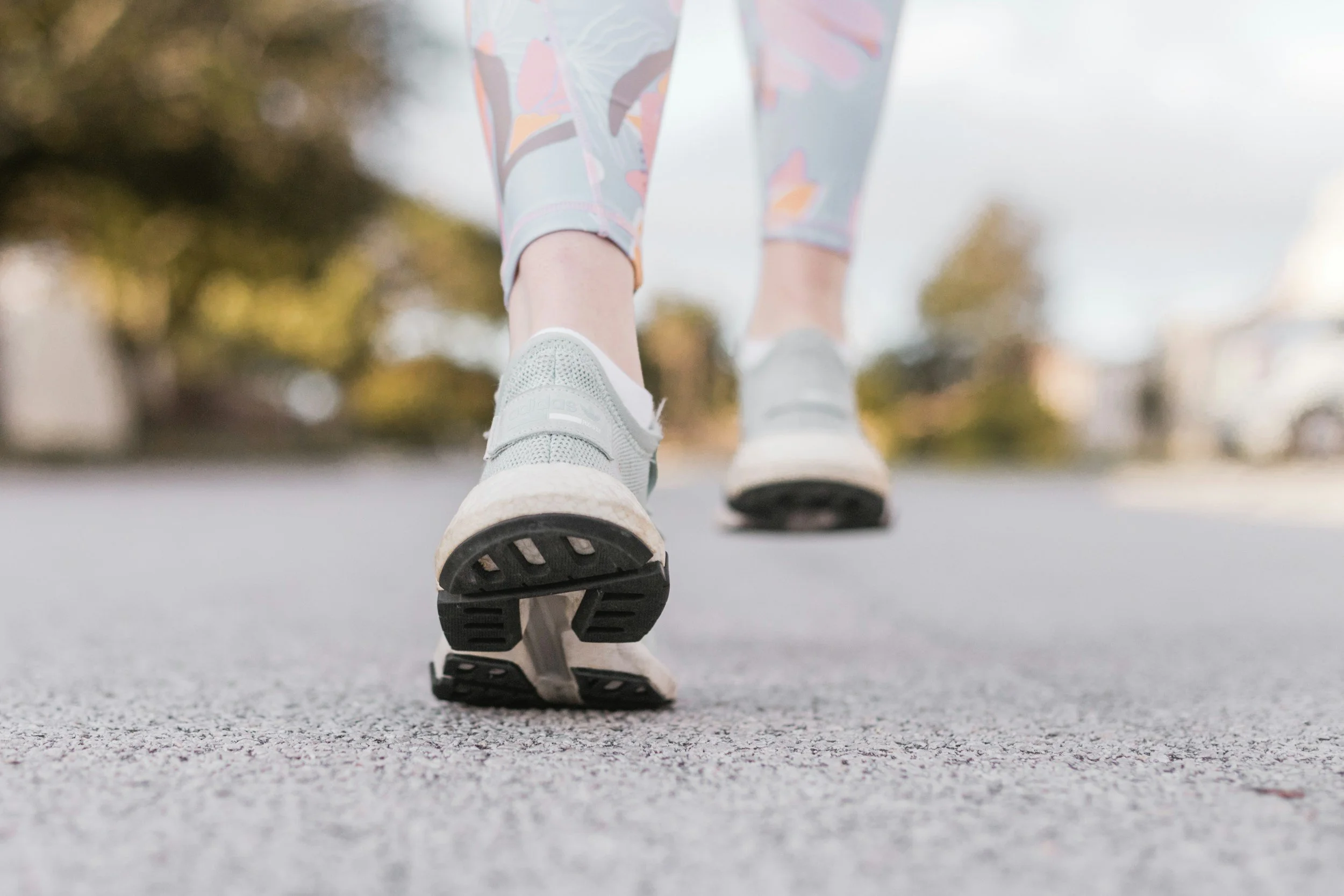
Walking supports heart health, joint mobility, balance, and mental well-being, and it remains one of the safest and most accessible ways to stay active throughout life. For these reasons, major medical organizations recommend regular weight-bearing activity, including walking, as part of lifelong bone health.
However, when the goal is to increase or maintain bone mineral density (BMD), research consistently shows that walking alone does not provide enough mechanical stimulus to strengthen bones. Bones adapt to the stress placed on them, and walking simply does not challenge the skeleton enough to trigger that adaptation.
What the science says
1. Brisk walking does not stop bone loss in postmenopausal women (Cavanaugh DJ, Cann CE, 1988)
Researchers followed 33 healthy women who were recently postmenopausal to see if brisk walking could slow bone loss, measured by quantitative computed tomography (QCT). Half the women walked three times per week for up to 40 minutes at a moderate intensity, while the others maintained their usual activity as a control group. After one year, the walking group lost about 5.6 percent of spinal bone density, compared with 4.0 percent loss in the control group. The difference was not statistically significant, and both groups experienced measurable bone loss despite the exercise. The study concluded that while walking has many health benefits, it does not prevent bone loss in the spine after menopause.
2. Effects of progressive weighted vest walking on bone density and muscle strength in postmenopausal women (Roghani et al, 2012)
This study included 36 postmenopausal women with osteoporosis who were assigned to one of three groups: treadmill walking without added weight, walking while wearing a weighted vest (4–8 percent of body weight), or a control group with no specific walking program. The walking groups completed three 30-minute sessions each week for six weeks. To assess the effects on bone metabolism, researchers measured serum osteocalcin (a marker of bone formation) and C-terminal telopeptide, or CTX (a marker of bone breakdown). Both walking groups showed improvements in bone turnover markers, while the weighted vest group had greater gains in muscle mass and balance. These results suggest that walking can improve the biological environment for bone formation, and walking with additional load may enhance those benefits compared with walking alone.
3. Effects of walking only interventions on bone mineral density at various skeletal sites: a meta-analysis (Palombaro, 2005)
This meta-analysis combined data from 10 clinical trials that tested walking-only programs in adults aged 50 and older to examine how walking affected bone mineral density. When results were pooled, walking showed a small positive effect on lumbar spine BMD, meaning people who participated in walking programs tended to have slightly higher spine bone density than expected. However, this effect was modest and inconsistent across studies, and walking showed no significant benefit for hip or heel bone density. The overall conclusion was that walking by itself is not sufficient to prevent bone loss at key skeletal sites in older adults. The author recommended adding other types of load-bearing activity to walking routines for better bone protection.
4. The volume of brisk walking is the key determinant of BMD improvement in premenopausal women (Lan & Feng, 2022)
Researchers studied 222 healthy premenopausal women and compared their bone mineral density based on how much brisk walking they performed, with BMD measured across the whole body. Women who regularly did brisk walking (about 30 minutes per day, three or more times per week) had significantly higher BMD (about 1.00 g/cm²) compared with more sedentary women (about 0.89 g/cm²). The analysis showed that the volume of brisk walking—the total amount of time and frequency—was more strongly linked with higher BMD than intensity alone. When a smaller group of previously sedentary women adopted brisk walking for two years, only those who reached the higher walking volume showed meaningful improvements in BMD. The authors concluded that long-term brisk walking at sufficient volume may help improve or slow the decline in bone density in premenopausal women.
Should you stop walking?
Walking is foundational, as it supports balance, coordination, muscle endurance, and cardiovascular health, and it plays an important role in fall prevention. Following guideline-recommended walking routines, such as 30–40 minute sessions 3-4 days per week, provides an excellent baseline for lifelong skeletal health.
For individuals aiming to further protect or improve bone density, especially after menopause or in the setting of osteopenia or osteoporosis, walking is most effective when combined with additional mechanical loading. Simple additions such as light jumps or heel drops, resistance training, or weighted walking (when appropriate) introduce greater skeletal challenge while remaining safe and accessible.
In this way, walking forms the core of a bone-healthy routine, but be sure to include targeted training like strength & impact on top of walking.
References
Cavanaugh DJ, Cann CE. Brisk walking does not stop bone loss in postmenopausal women. Bone. 1988;9(4):201–204.
Roghani T, Torkaman G, Movasseghe S, et al. Effects of short-term aerobic exercise with and without external loading on bone metabolism and balance in postmenopausal women with osteoporosis. Rheumatology International. 2013;33(2):291–298. [Note: this paper was published in Rheumatology International, not Journal of Aging and Physical Activity as cited.]
Palombaro KM. Effects of walking-only interventions on bone mineral density at various skeletal sites: a meta-analysis. Journal of Geriatric Physical Therapy. 2005;28(3):102–107.
Lan YS, Feng JY. The volume of brisk walking is the key determinant of BMD improvement in premenopausal women. PLoS One. 2022;17(3):e0265250.
Camacho PM, Petak SM, Binkley N, et al. American Association of Clinical Endocrinologists/American College of Endocrinology Clinical Practice Guidelines for the Diagnosis and Treatment of Postmenopausal Osteoporosis—2020 Update Executive Summary. Endocrine Practice. 2020;26(5):564–570.