Calcium for Bone Health: Why I Recommend a Food-First Approach
Last Updated: June 26, 2026
One of the most common questions I hear from clients is, “Can’t I just take a calcium supplement instead of worrying about getting enough from food?”
It’s a great question, and the answer is usually no.
While calcium supplements can play an important role for some people, especially if dietary intake falls short, I encourage most clients to focus on getting as much of their calcium as possible from food. Here’s why.
Food Is About More Than Just Calcium
When you eat calcium-rich foods, you’re getting an entire package of nutrients that work together to support healthy bones.
Dairy foods, leafy greens, calcium-set tofu, canned salmon or sardines with bones, and even foods such as beans, nuts, and seeds offer unique nutritional benefits that support bone health beyond their calcium content. Take yogurt, for example. It doesn’t just provide calcium - it also contains protein, phosphorus, potassium, and other nutrients that contribute to bone strength.
In addition to all of the individual nutrients, these compounds often work together to produce a greater net result. Researchers often refer to this as the food matrix: the natural combination of nutrients and bioactive compounds found in whole foods. These components act synergistically in complex ways that may influence nutrient absorption, utilization, and overall health, providing benefits that extend beyond the effects of isolated nutrients alone.
Spreading Calcium Throughout the Day Matters
Another benefit of getting calcium from food is that it naturally encourages you to consume it in smaller amounts throughout the day.
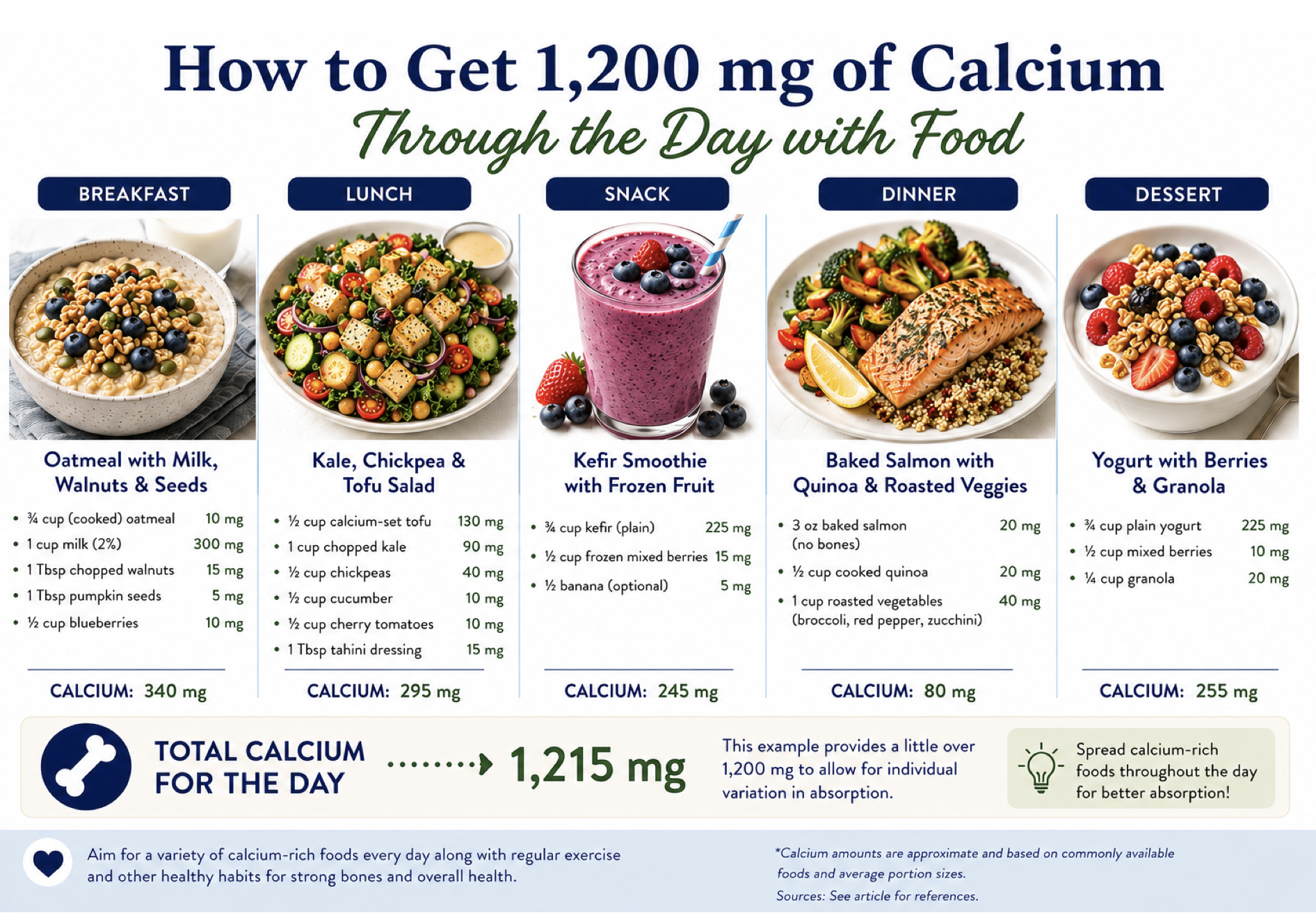
Our bodies absorb calcium most efficiently when intake is spread across meals and snacks. In general, calcium absorption becomes less efficient past a certain point, generally when more than about 500 milligrams is consumed at one time. Instead of relying on a single large supplement, enjoying calcium-rich foods at breakfast, lunch, dinner, or as a snack helps your body make better use of this important mineral.
More Calcium Doesn’t Always Mean Stronger Bones
It’s easy to assume that if some calcium is good, more must be better. But that isn’t necessarily true.
Once your body has absorbed what it can, extra calcium won’t magically build more bone. In fact, excessive supplementation may increase the risk of side effects such as constipation and, in some individuals, kidney stones. Some research has also raised concerns about potential cardiovascular risks associated with high-dose calcium supplementation, although findings remain mixed and continue to be debated.
The goal is to meet your daily calcium needs, not greatly exceed them.
Whole Foods Support Overall Health
One of the things I love about taking a food-first approach is that it benefits far more than your bones.
When you choose calcium-rich foods, you’re often also getting:
• High-quality protein to support muscle and bone.
• Vitamins and minerals such as magnesium, potassium, phosphorus, and vitamin K that contribute to bone and overall health.
• Fiber, healthy fats, probiotics, and antioxidants that support digestion, heart health, and general wellness in addition to bones.
When Supplements Can Be Helpful
Of course, there are situations where calcium supplements may make sense. If you have dietary restrictions, lactose intolerance, certain gastrointestinal conditions, or simply struggle to meet your needs through food, a supplement may help fill the gap.
In my practice, I think of supplements as exactly that: supplemental. They’re meant to complement a nutritious diet only as needed, not replace it.
When supplementation is needed, I generally recommend using the smallest amount necessary to close the gap between dietary intake and daily needs rather than automatically taking large doses.
Simple Ways to Eat More Calcium
Here are a few easy strategies to increase your calcium intake naturally:
Include yogurt or cottage cheese with breakfast or as a snack.
Add milk, kefir, fortified soy milk, or fortified orange juice to smoothies.
Toss calcium-set tofu, white beans, or navy beans into stir-fries or salads.
Try canned salmon or sardines (with the soft edible bones).
Sprinkle walnuts, sunflower seeds, pumpkin seeds, or roasted chickpeas onto salads, yogurt, or oatmeal.
Emphasize kale, arugula, bok choy, collard greens, brussels sprouts, and broccoli as your greens, raw or cooked in soups and side dishes.
While spinach is often thought of as a calcium-rich food, much of its calcium is bound to oxalates, making it less available for absorption than lower-oxalate greens such as kale, bok choy, and collards.
Enjoy a glass of milk or chocolate milk as a snack.
Make a trail mix that includes calcium rich ingredients such as walnuts, macadamia nuts, pistachios, pecans, pumpkin seeds, sunflower seeds, and diced dried figs.
Enjoy fruit such as oranges, kiwis, blackberries, and dried figs, which contribute to calcium intake while providing other valuable nutrients.
Small choices throughout the day can add up and make it much easier to reach your calcium goal.
The Bottom Line
If you’re working to prevent or manage osteopenia or osteoporosis, calcium is critical, but bone health is about your overall eating pattern, not just one nutrient or one supplement.
Whenever possible, aim to get your calcium from a variety of whole foods spread throughout the day. You’ll not only support your bones but also provide your body with the many other nutrients it needs to thrive. And if you still fall short, a thoughtfully chosen supplement can help bridge the gap.
Remember, healthy bones are built meal by meal, step by step, and rep by rep. Consistently nourishing your body with calcium-rich foods, engaging in appropriate weight-bearing and resistance exercise, and supporting your overall health with smart lifestyle habits can make a meaningful difference over time. Focus on progress, not perfection - those small choices really do add up to stronger bones and a healthier future.
Stronger bones are built one day at a time. Nourish well. Move with purpose. Stay consistent.
References
Bone Health & Osteoporosis Foundation. Calcium and Vitamin D.
Weaver CM, Peacock M. Calcium. In: Present Knowledge in Nutrition, 11th ed. Academic Press; 2020.
Thorning TK, Bertram HC, Bonjour JP, et al. Whole dairy matrix or single nutrients in assessment of health effects: current evidence and knowledge gaps. American Journal of Clinical Nutrition. 2017;105(5):1033–1045.